Ontario / Practical guides
Get on a general contractor's bid list without knowing anybody
There is no register to sign and no form to fill. Work arrives because somebody at a builder has your name in front of them. Find the person, send them something worth keeping, and be able to answer the prequalification package when it comes.
Browse all Ontario guidesPut this into practice
Find relevant work
Explore opportunities and carry the right one into a pursuit.
Nobody explains how bid invites happen. There is no register to sign, no form, no listing. Work arrives because somebody at a builder has your name in front of them when a job comes up.
Which is exactly the complaint
"i can read drawings but have no idea where to start with actually bidding or how you get people to send you bid invites i have very limited knowledge as nobody Ive talked to has been any help or wanted to help."
"Unfortunately business has dried up this year and we're looking for new ways to get more work. One of the strategies we want to explore is finding a way to partner with GCs/Builders so they start referring us to their customers so we can at least throw our hat in the ring with an estimate on new houses."
Twelve years apart in experience, same question. The answer is not networking advice. It is three concrete things: find the person, send them something worth keeping, and be able to answer the paperwork when they ask.
Find the person, not the company
A bid list is not held by a company. It is held by an estimator or a project coordinator, and it is usually a spreadsheet or an address book in their procurement software. You are trying to get onto one human's list.
So the unit of work is a person: name, role, employer, phone, email, and what you have said to each other.
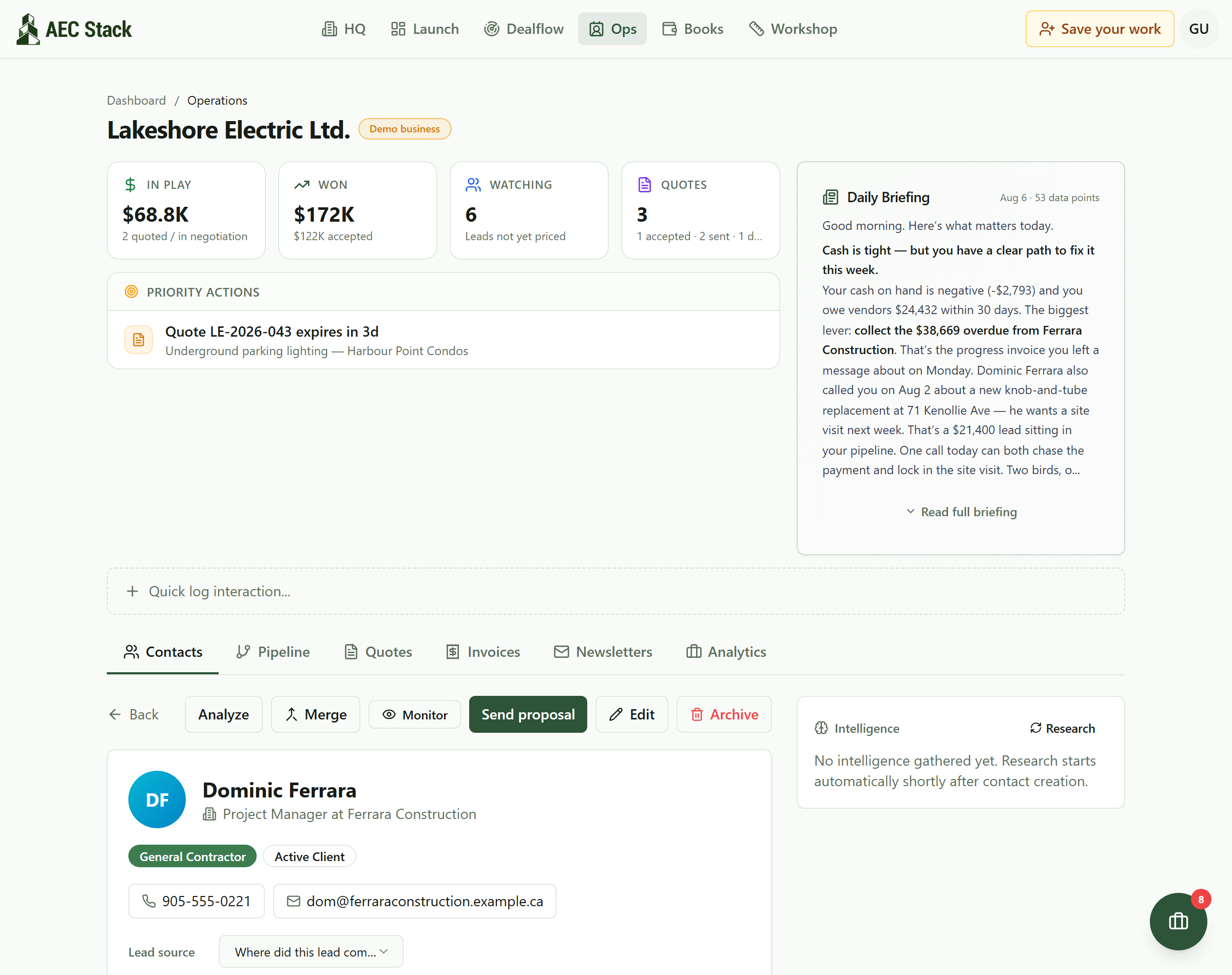 One person at one builder, with the actions you can take on them in a row. Send proposal does not need a quote to exist.
Where they come from: site meetings, supply houses, the tender feed, a job where you were a sub two years ago, a foreman who moved. Put each one in as a person the day you meet them, with the date you spoke and what about. That record is what makes a call in November possible after a conversation in March.
Send them something worth keeping
Here is the part that is normally the blocker. You have nothing to send. You are not quoting anything yet, so a quote is not the thing, and "keep me in mind" in an email body gets deleted.
What a coordinator can actually file is a credentials package: who you are, what you do, what you hold, who you have done it for.
Send proposal on a contact with no quote attached builds exactly that. It reads your business, your certifications, your past jobs and what you have logged about this contact, and writes a cover letter to this person about their work rather than a template.
Then it does something more useful than writing.
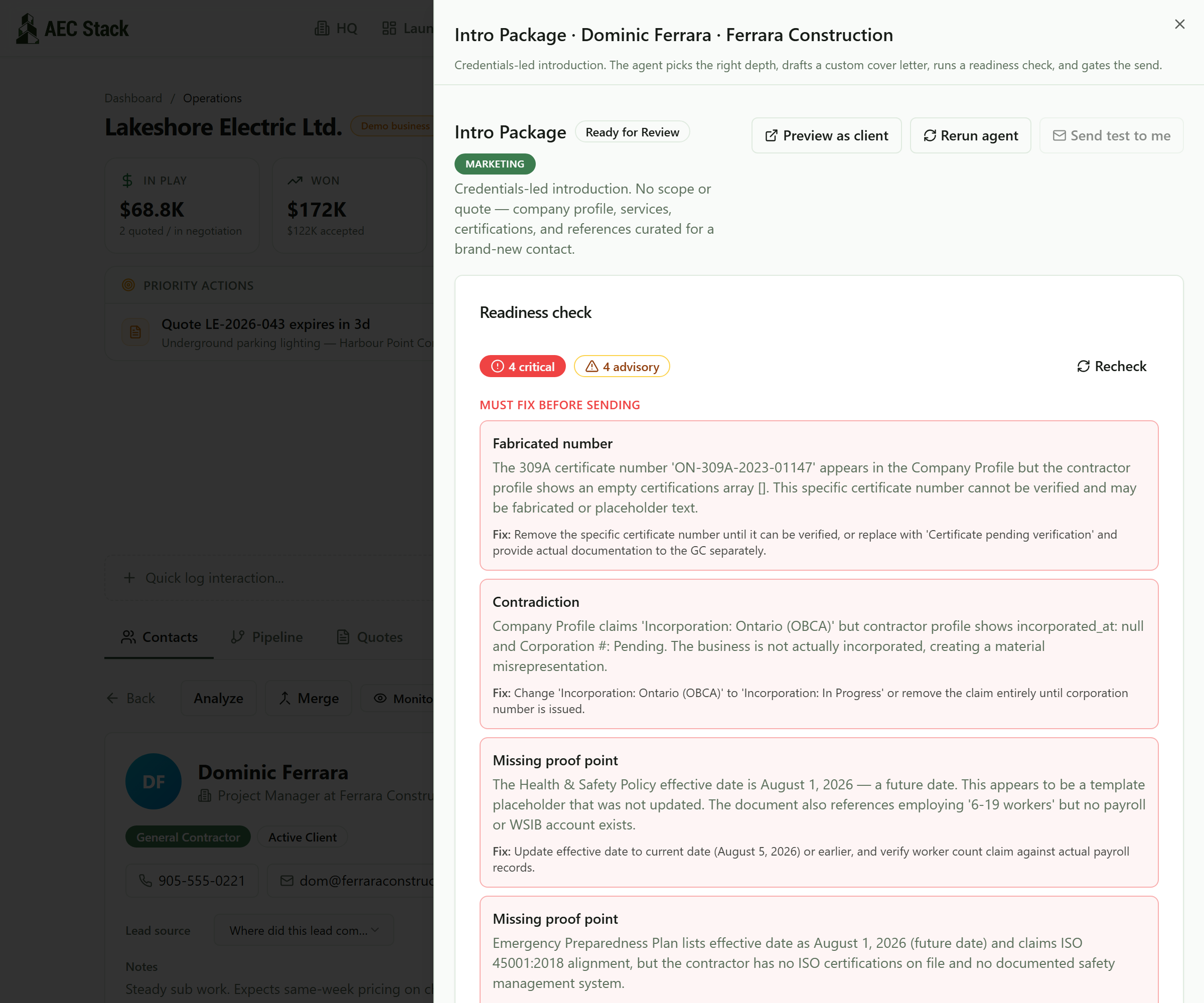 The agent wrote the package and then refused to let it go. Every flag names the document, the claim, and what to change.
It read its own output back and stopped the send. A certificate number appears that your record cannot verify. The profile says incorporated when the corporation number is still pending. A policy carries next month's date. Four of those are marked must fix, and the send button is off until they are.
That is the difference between a package that gets you on a list and one that gets you struck off it. A coordinator who catches one unverifiable claim treats the whole document as unverified, and you do not get a second look. The uncomfortable version of the package is the one worth sending.
Be able to answer the paperwork
Once somebody is interested, they send a prequalification package. It is long, it is boring, and it asks for documents that only exist if somebody sat down and wrote them.
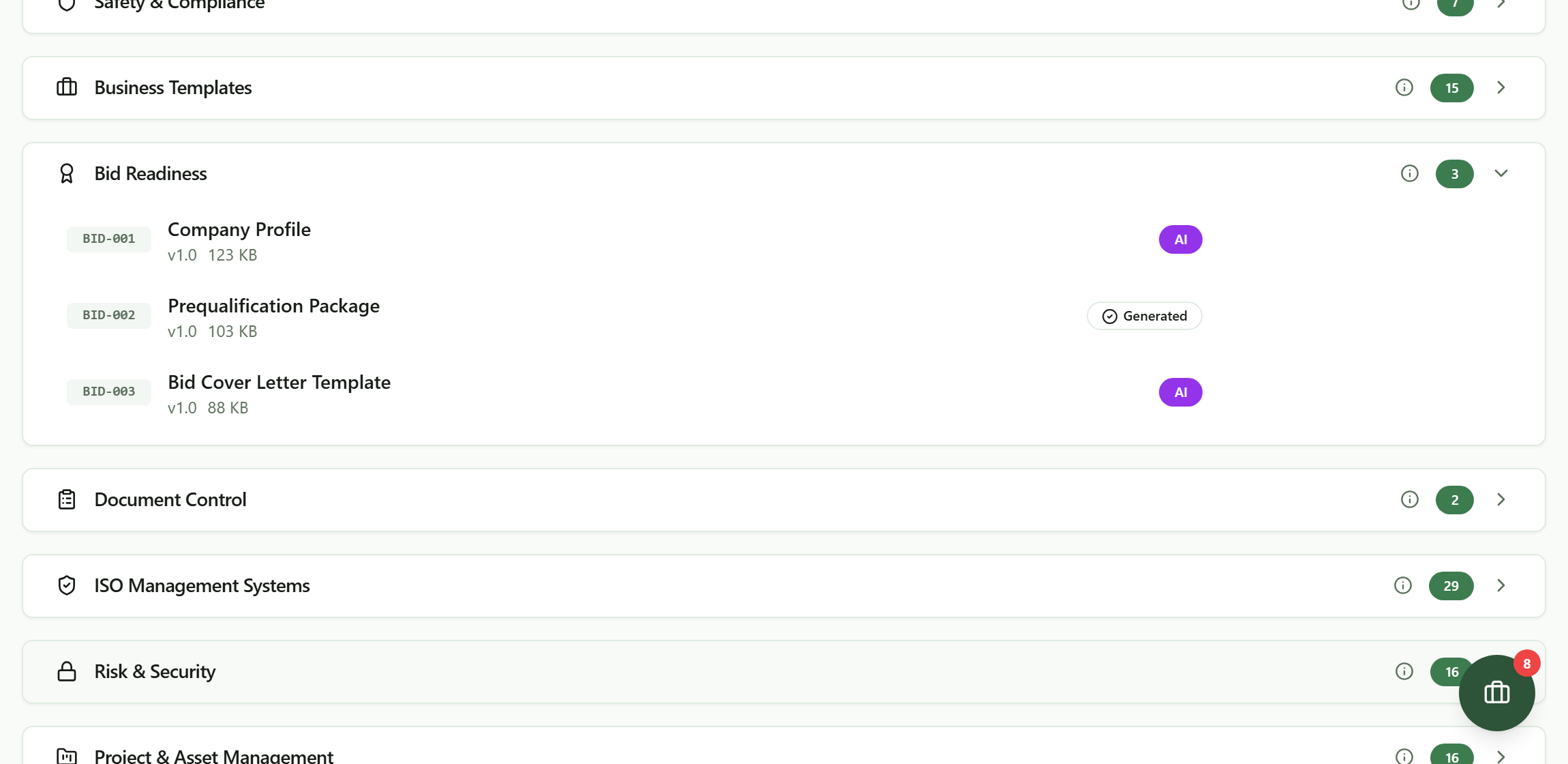 Numbered, versioned, and already written. A prequalification reviewer asks for exactly this.
Control numbers and versions matter more than they look. A prequal reviewer is checking that you have a document system at all, and a numbered, versioned document with a register behind it answers that question before they finish reading the title.
Beside those sit the health and safety policy, the WHMIS program, the site inspection checklist, and the ISO-aligned manuals, which is the rest of what the longer packages ask for.
The sequence that actually works
Get one name per builder. Not the info@ address. The estimator or the coordinator.
Send the credentials package once, and clean it first. Whatever the readiness check flags is the thing a reviewer would have found.
Log every contact with a date. Site visit, call, drop-in, the fact that they mentioned a project starting in spring.
Follow the tender feed for their jobs. Turning up on a job they are bidding, having already introduced yourself, is worth more than five emails. That is where work is starting.
Have the compliance paperwork ready before they ask. Being fast on the prequal is itself a signal about how you will run the job.
What separates the ones who get on the list
One builder at a time, addressed to a person. Coordinators talk to each other, and they can spot the same PDF that went to forty firms. A package written about their work beats forty generic ones.
Everything you claim, documented. This is why the readiness check earns its place: a coordinator who can verify every line stops checking and starts trusting. That is the whole asset you are building.
A reason for every follow-up. Once after you send, then only when something has changed: a job you saw them win, a credential you have added, a project of theirs you are working near. Contractors who call with a reason get answered.
What it costs
Commercial terms depend on the workflow. Review the relevant AEC Stack product page before you start.
On AEC Stack: what to do when the invite arrives is pricing a job and what the price assumed. Keeping the certificates they ask for current is clearances and certificates.
Pick one builder you have worked near but never worked for. Find the coordinator's name. Send the package. That is the whole first step. Where work is starting is how you find the builder worth picking.
Take this guide with you
The full write-up, every screenshot and clip, captions, and a machine-readable manifest in one zip. Share it with your office or hand it to whoever runs your socials.
Download the kitContinue reading