Ontario / Practical guides
Work through everything between incorporation and your first bid
Incorporating is the starting gun, not the finish line. Ten stages generated for your trade, the next three things to do at the top, and a percentage that moves for the right reasons.
Browse all Ontario guidesPut this into practice
Build the offer
Connect the scope, price, assumptions, and client response in one working proposal.
Incorporating feels like the finish line and it is closer to the starting gun. The company exists. It cannot yet bid on anything, because the people who hand out work will ask for six things you have not got, and they will ask for them in the week you least have time.
The difficulty is not any single step. It is that nobody hands you the list, and the list is different for a glazier than for an electrician.
How people describe looking for the list
"I am contemplating starting my own glazing/door/caulking sub-contracting business in ontario, but search engines are horrible resources these days and I could not find a straight forward answer."
What it costs to find out late:
"Being business noobs I had no idea WSIB was mandatory and even if it wasn't all builders ask for it."
"RE: #6, you will never get quality commercial work without WSIB. You'll need it to even step foot on some properties."
And the version that gets used instead, which is a good list held in one person's head:
"link up with a good accountant and lawyer incorporate apply for your ECRA contractor license get a corporate bank account. I like Meridian get liability insurance get a used van put some shit in it get an account or two at some suppliers"
That is not bad advice. It is just not a list you can work through, hand to somebody else, or measure yourself against.
The list, with a number on it
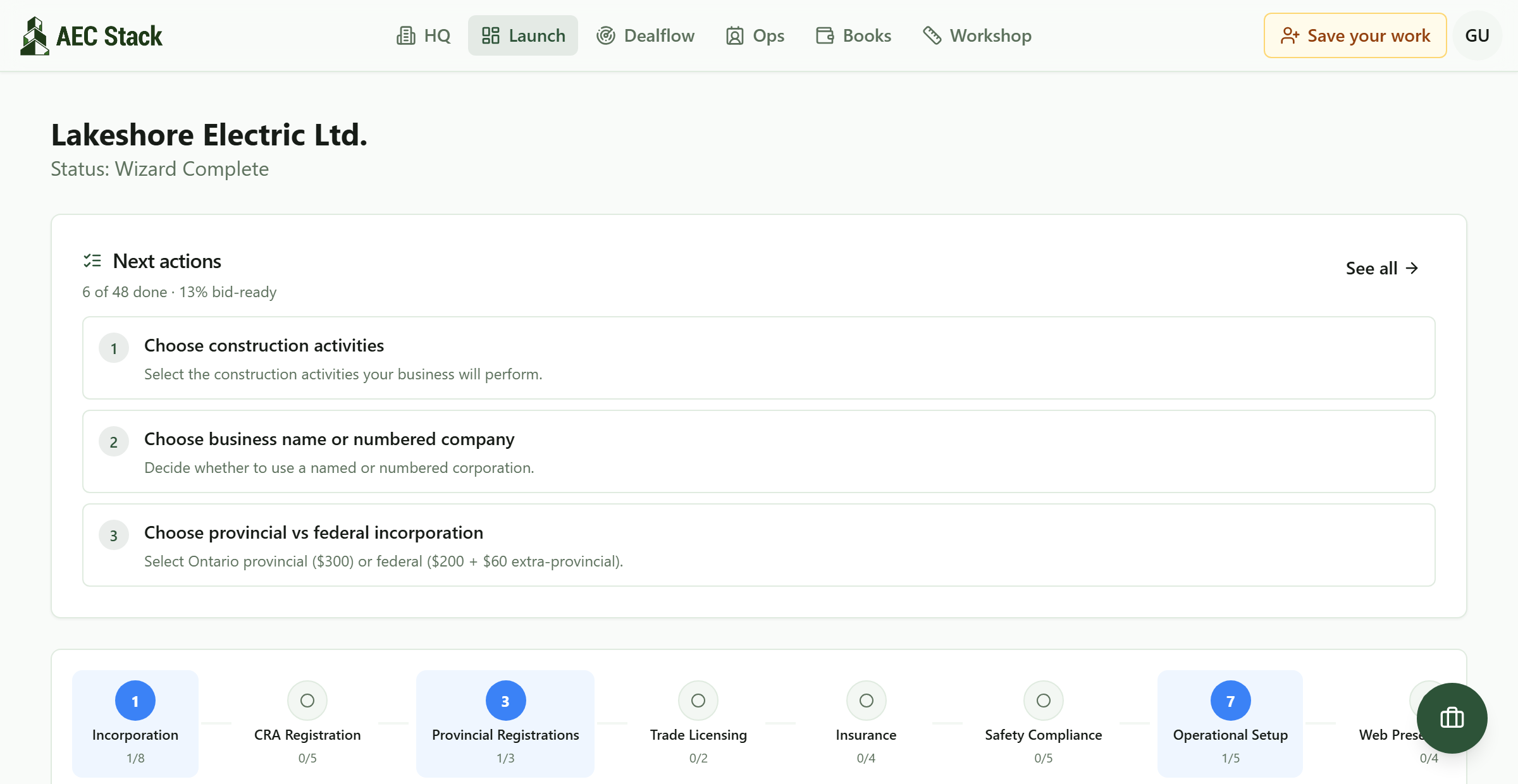 Everything between an incorporation and a first bid, in ten stages, with the next three things to do at the top.
Ten stages, and the count is generated for your trade and your structure rather than being one generic list. An electrical contractor gets ECRA and ESA rows that a landscaper does not.
Bid-ready percent is the number to watch. It is the share of the list that is done, and it is a description of your own checklist rather than an accreditation anybody else recognises. What makes it useful is that it moves for the right reasons: it does not care that you have a logo, it cares that you have insurance and a clearance.
Next actions is the part that actually gets used. Three items, in order, so the question each morning is not "what is left" but "what is next". The order matters more than people expect: several of these have waiting periods, and doing the free one that takes six weeks before the expensive one that takes an afternoon is worth real money.
Put the paperwork you already have into it
You are not starting from nothing. There is a clearance in an email somewhere, an insurance certificate in a glovebox, a licence.
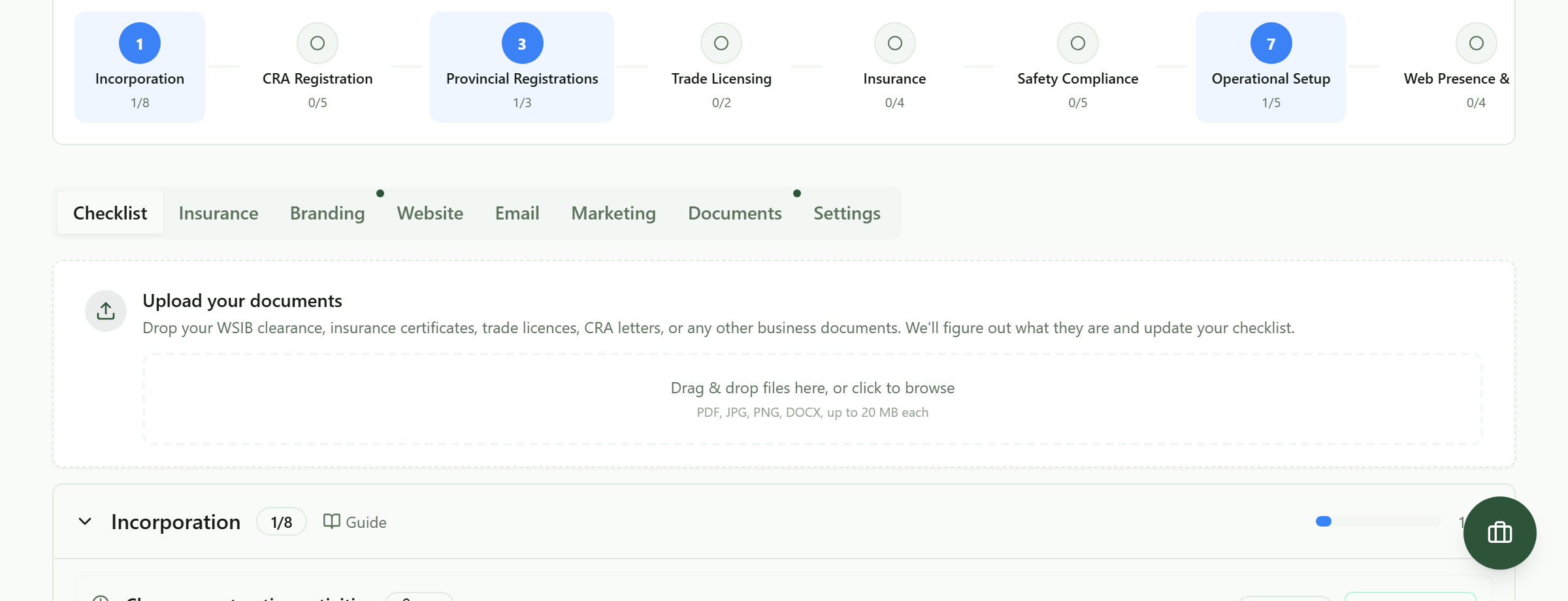 Drop the paperwork you already have. It gets read, filed and ticked off, rather than you finding the matching checklist row.
Drop the lot in at once. Each file gets read, sorted and matched to the row it satisfies, so the checklist reflects where you actually are rather than where you have had time to record.
It is a model reading your documents, so look at what it filed. It is very good and it is not a clerk you should never check.
The order that saves months
Whatever your list says, three principles hold.
Start the slow ones first. Registrations with waiting periods, anything that needs an inspection, anything that needs somebody else to sign. These run in the background while you do everything else. Starting them last is how a first bid slips a quarter.
Do the ones that gate site access before the ones that gate looking good. A clearance certificate gets you onto a property. A brochure does not. The stages are ordered with that in mind, and the temptation is to do the fun ones first.
Record the numbers as they arrive. Corporation number, business number, HST, WSIB account. They get asked for constantly, and the difference between having them in one place and hunting through email is about an hour a month forever.
Then the pieces that expire, clearances and certificates and tickets, want their dates recorded so they do not lapse the week a GC asks. That is licences and credentials.
What it costs
Commercial terms depend on the workflow. Review the relevant AEC Stack product page before you start.
The government fees, insurance premiums and licence costs are not ours and are not included. What the setup itself costs is what going out on your own costs.
On AEC Stack: the two stages people underestimate have their own pages: WSIB and incorporation. When the list is done, the next problem is being invited to bid at all: where work is starting.
Open your dashboard and do the first of the three next actions. Then drop in whatever paperwork you already have and watch the percentage move without you doing anything.
Take this guide with you
The full write-up, every screenshot and clip, captions, and a machine-readable manifest in one zip. Share it with your office or hand it to whoever runs your socials.
Download the kitContinue reading