Ontario / Practical guides
Start the day knowing what today's job is, from one screen
The worst part of running a contracting business is the twenty minutes before the work, spent reconstructing what happened yesterday. A briefing written each morning from your own invoices, deals and books, ranked so the top card is the one that matters.
Browse all Ontario guidesPut this into practice
Explore a working business
Put the people, records and day-to-day work together in a sample business.
The worst part of running a contracting business is not the work. It is the twenty minutes before the work, spent finding out what happened while you were on site yesterday: who paid, who did not, which quote went quiet, what the bank looks like, what you promised somebody on Thursday.
Most people do that reconstruction every morning, from memory, in a truck, badly.
What that morning sounds like
"It's the same routine every single morning: calling suppliers about late materials, chasing down permits, trying to figure out which subs are even showing up. Yesterday I saw him on hold for a solid 30 minutes with the city, just to schedule a simple inspection."
Ninety-nine comments underneath, mostly contractors agreeing. The reason that morning repeats is not disorganisation. It is that the answer to "what is going on" lives in six places, and none of them volunteer anything.
One screen, already ranked
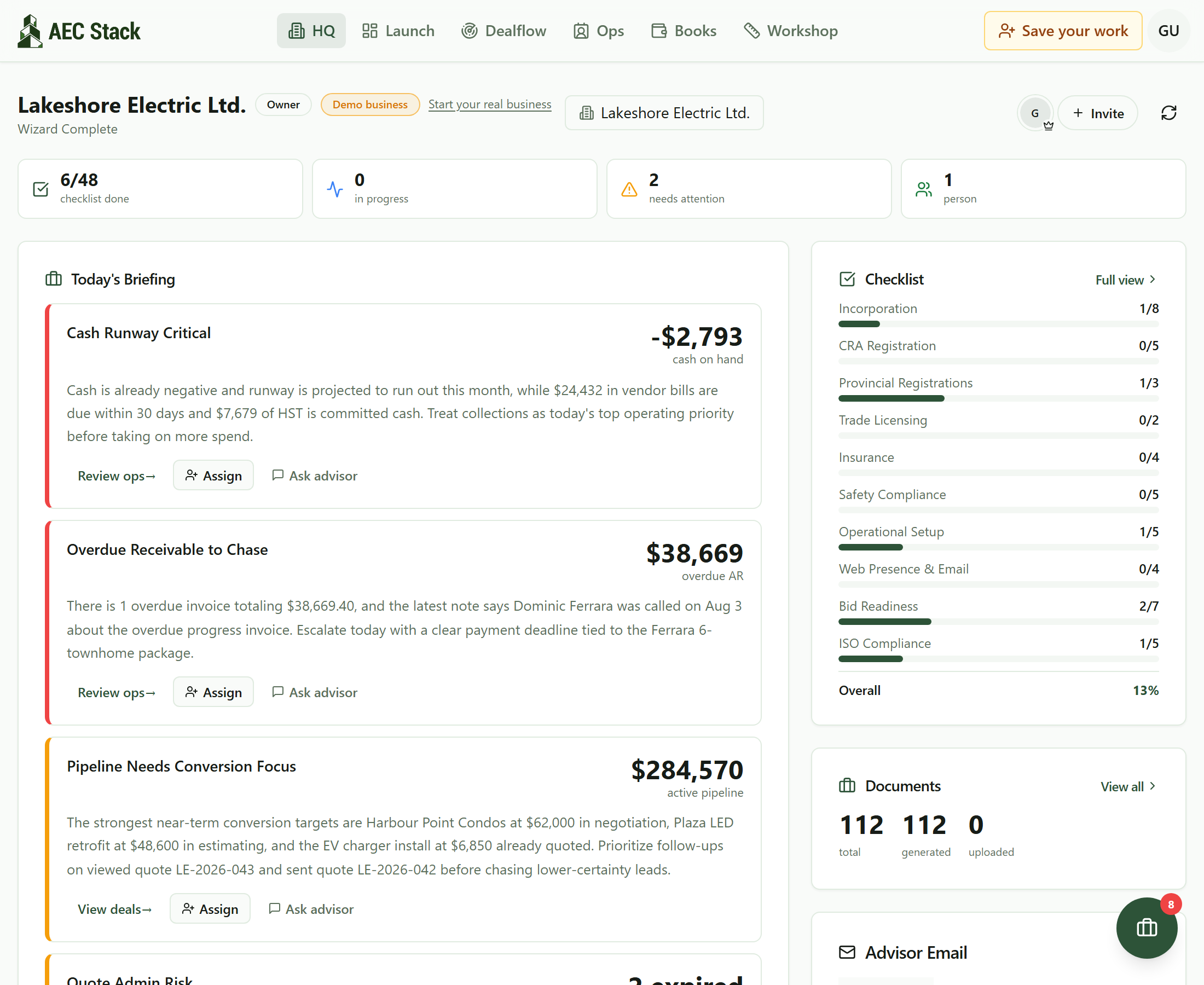 What the morning screen leads with. Written from your own invoices, pipeline and books, and ranked, so the top card is the one that matters most today.
Three things about that panel are worth more than the fact that it exists.
It is ranked, not listed. Cash first, because cash is negative. Then the one overdue invoice that is causing it. Then the pipeline. A list of everything is what you already have; a list in order is the thing you cannot make at 6am.
It names names. "Dominic Ferrara was called on Aug 3 about the overdue progress invoice" is a sentence you can act on before you have finished reading it. "You have overdue receivables" is not.
Every card ends in a move. Review, Assign, or Ask advisor. The point of the screen is to be left, not to be studied.
Where the sentences come from
Nothing on that screen was typed by anybody. It is written each morning from what the business already recorded: the invoices you raised and which of them were paid, the deals on your board and when they last moved, the books, the call you logged on Monday, the setup steps still open, and the live Ontario tender feed filtered to your trade.
That is why it can say $38,669.40 rather than "some overdue invoices", and why it knows the call happened. It is reading your work, not a template.
The rest of it
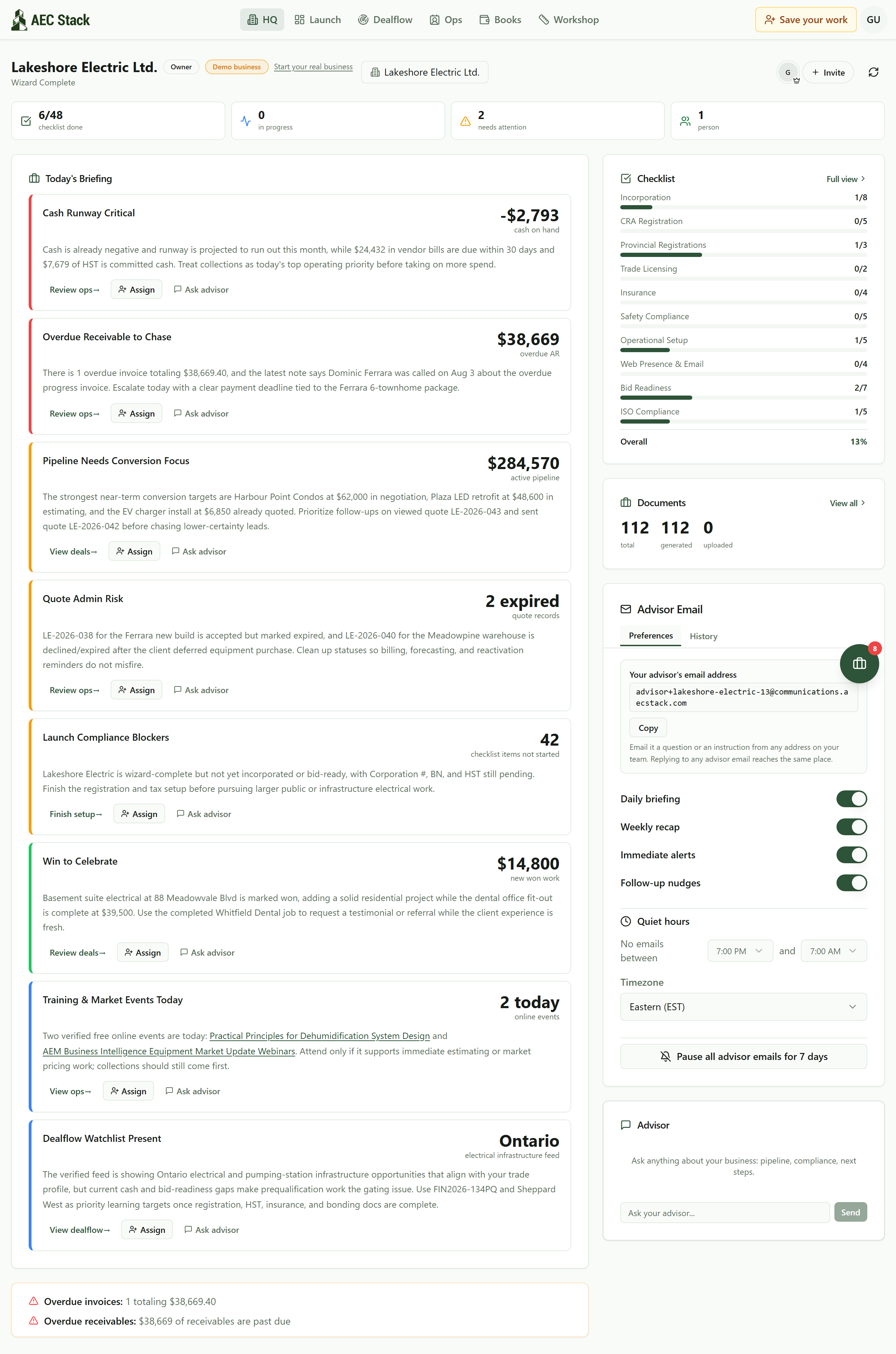 One screen, opened once, before the first phone call. Everything on it came from the work already recorded.
Underneath the money cards, the same screen carries the rest of the morning: quotes that expired while you were busy, setup steps still blocking bigger work, a job you won that is worth a testimonial while the client is still happy, free training on today, and what the tender feed turned up in your trade.
At the bottom, the alerts strip repeats the two things that must not be scrolled past.
The five minutes
Same order, every day.
Read the top card only, and do it. If the top card is cash, the morning is a collections morning. Deciding that before the phone starts is the whole benefit.
Check anything red. Red is money already lost or about to be. Amber can wait until after lunch.
Look at the expiring quotes. A quote past its valid-until date is a follow-up with a built-in reason to call, which is easier than a follow-up without one.
Then close it. The screen is not a place to spend the morning. It is the thing that tells you where the morning goes.
If you would rather not open anything
The same briefing is emailed. Which parts reach you is yours to set: daily briefing, weekly recap, immediate alerts, follow-up nudges, each on its own switch, with quiet hours so nothing lands at 9pm, and a one-press pause for a week when you are flat out on a job.
You can also reply to that email in ordinary words and have the work done, which is doing your admin by replying to an email.
If there are more of you
Every card has Assign on it. Handing "chase Ferrara" to whoever does the chasing takes one press, and it lands on their list rather than in a text message that gets buried.
Feed it in one line and it gets sharper
The briefing is built from what the business has recorded, which means every thirty seconds you spend recording pays you back the next morning.
Log the call when you put the phone down. One line, from the truck: "spoke to Dave, wants a price by Friday." That sentence is why tomorrow's screen can tell you Dave is waiting, instead of you remembering it in the shower on Saturday.
The contractors who get the most out of this are not the ones who enter the most. They are the ones who enter the one thing that just happened, immediately, and then forget about it.
What it costs
Commercial terms depend on the workflow. Review the relevant AEC Stack product page before you start.
On AEC Stack: the board the pipeline card is reading is every job on one board. The money cards come from your books and invoicing and getting paid on time.
Open the business workspace tomorrow morning before you open anything else, work the record that needs attention first, and see whether the twenty minutes comes back.
Take this guide with you
The full write-up, every screenshot and clip, captions, and a machine-readable manifest in one zip. Share it with your office or hand it to whoever runs your socials.
Download the kitContinue reading