Ontario / Practical guides
Sole proprietor or incorporate in Ontario: make the call and start the registration today
Three paths priced on one screen: $100 for an Ontario sole proprietorship, $400 for an Ontario corporation, $300 federal, with the government filing fees inside each number. Fill the whole registration in, right to the review screen, before any account is needed.
Browse all Ontario guidesPut this into practice
Start with your business
Organize formation, standing, and the records that let the business operate.
Every contractor who goes out on their own in Ontario hits the same fork: register as a sole proprietor or incorporate. Ask around and the answers conflict. The accountant says one thing, WSIB's phone line says another, and the Reddit thread you found at midnight swears both ways. So the decision stalls, and everything behind it stalls too: the bank account, the insurance, the first invoice with your own name on it.
This page puts the decision on one screen. By the end of it you will have seen what each path asks of you and the registration filled in to the final review screen, whichever way you lean. The launch flow shows the current terms before you authorize a filing.
How contractors describe the problem
The fork is one of the most repeated questions tradespeople ask each other, in exactly these words:
"I wanna know if yall are sole proprietors or corp and what's the pros and cons"
One WSIB quirk comes up over and over as the thing that pushes sole proprietors toward incorporating:
"For example if I bill 1000 for a job. I bought a new tool some nails and fuel expenses which totaled 300. I pay wsib on the full 1000 i billed. I can't understand the reasoning for this and it just seems to make sense to incorporate even if I only were to bill for 50000 in a year."
"But the part that threw me off was the accountant and wsib themselves saying I should pay premiums on total invoice amount."
And people who did incorporate sometimes report the payoff was not what they expected:
"I went corporation to separate myself from the company, but I've learned since that it adds no extra legal protections in Canada. I don't know if it actually helped, but the tax structure might be better since I don't pay myself. Talk to an accountant."
The pattern under all of it: the decision feels bigger than it is because nobody shows you both paths clearly. Start with the structure and your professional advice, then review the current filing terms in the launch flow.
See all three paths on one screen
Open the launch wizard. Step 1 puts the whole fork on one screen: a named corporation, a numbered corporation, or a sole proprietorship. Review the current terms in the flow before authorizing a filing.
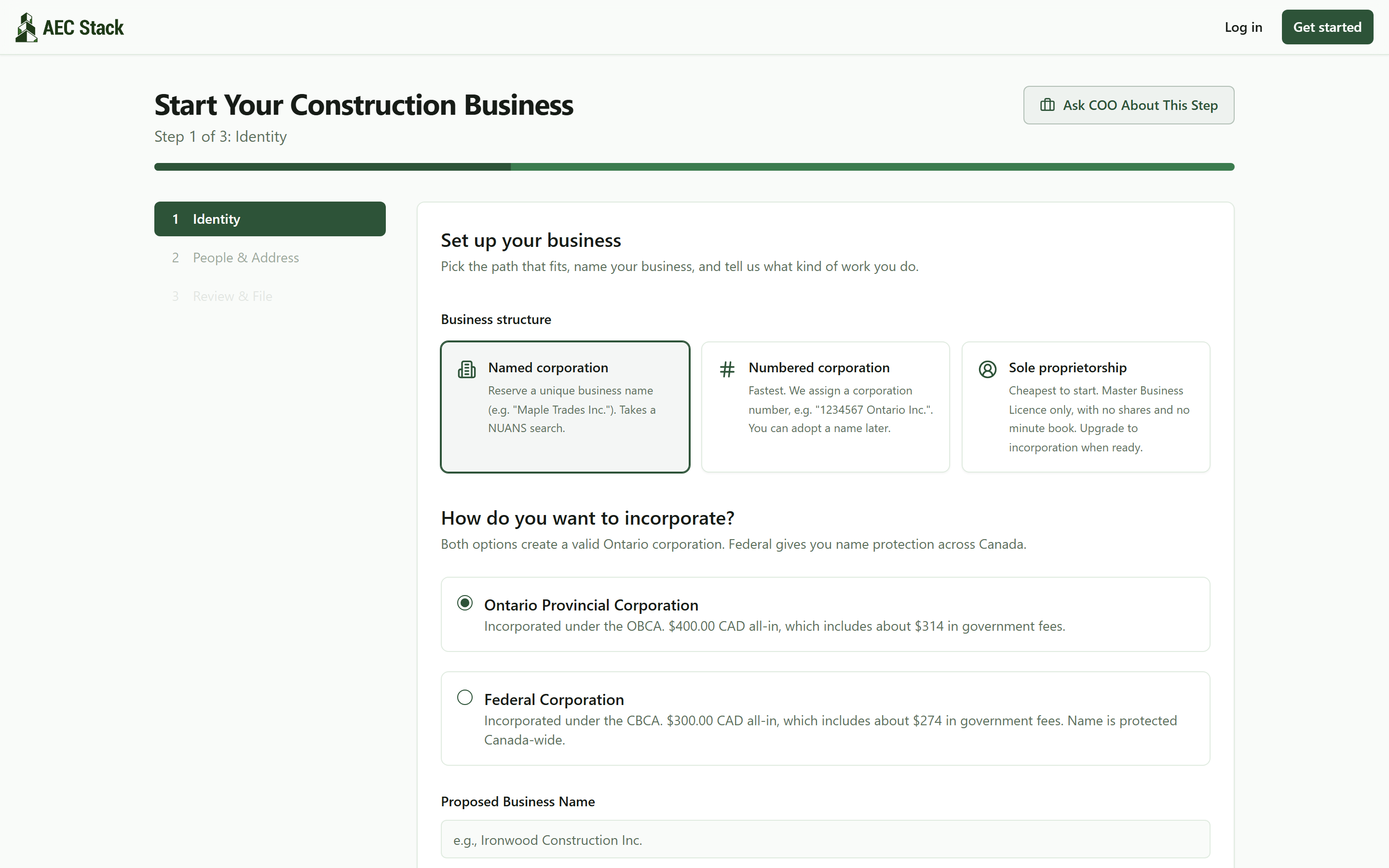 The fork on one screen: named, numbered, or sole proprietorship.
A named corporation needs a NUANS name search, which the wizard runs as you type. A numbered corporation skips the naming question entirely: you receive a numbered corporation and can adopt a business name after.
Every step also has an "Ask COO About This Step" button that explains the decision on that specific screen, so you are never guessing at what a field means.
What each choice changes
In contractor terms, not lawyer terms:
- Sole proprietorship: you and the business are the same legal person. Cheapest and fastest to register, income is simply your income, and there are no shares or minute book to maintain. The flip side is in the quotes above: the business's debts are your debts, and sole proprietors in construction describe WSIB premiums calculated on gross billings, not on what lands in their pocket.
- Corporation: a separate legal entity with its own tax filing, shares, and paperwork. Many GCs, bonding companies, and commercial clients expect to deal with one. The wizard's own sole proprietorship screen says it plainly: most contractors find they need to incorporate within their first year to get bonded, qualify for commercial work, and limit personal liability.
Which one is right depends on your income, your risk, and the contracts you chase. That part is an accountant conversation, and this page will not pretend otherwise. What the wizard removes is the excuse to stall: both registrations are a few screens, and the sole proprietorship path is built to be upgraded from your dashboard later.
Start as a sole proprietor if speed wins
Pick the sole proprietorship card and the form gets shorter, not longer. You enter an operating name, with no "Inc." or "Ltd." required. Review the current registration terms in the flow before proceeding.
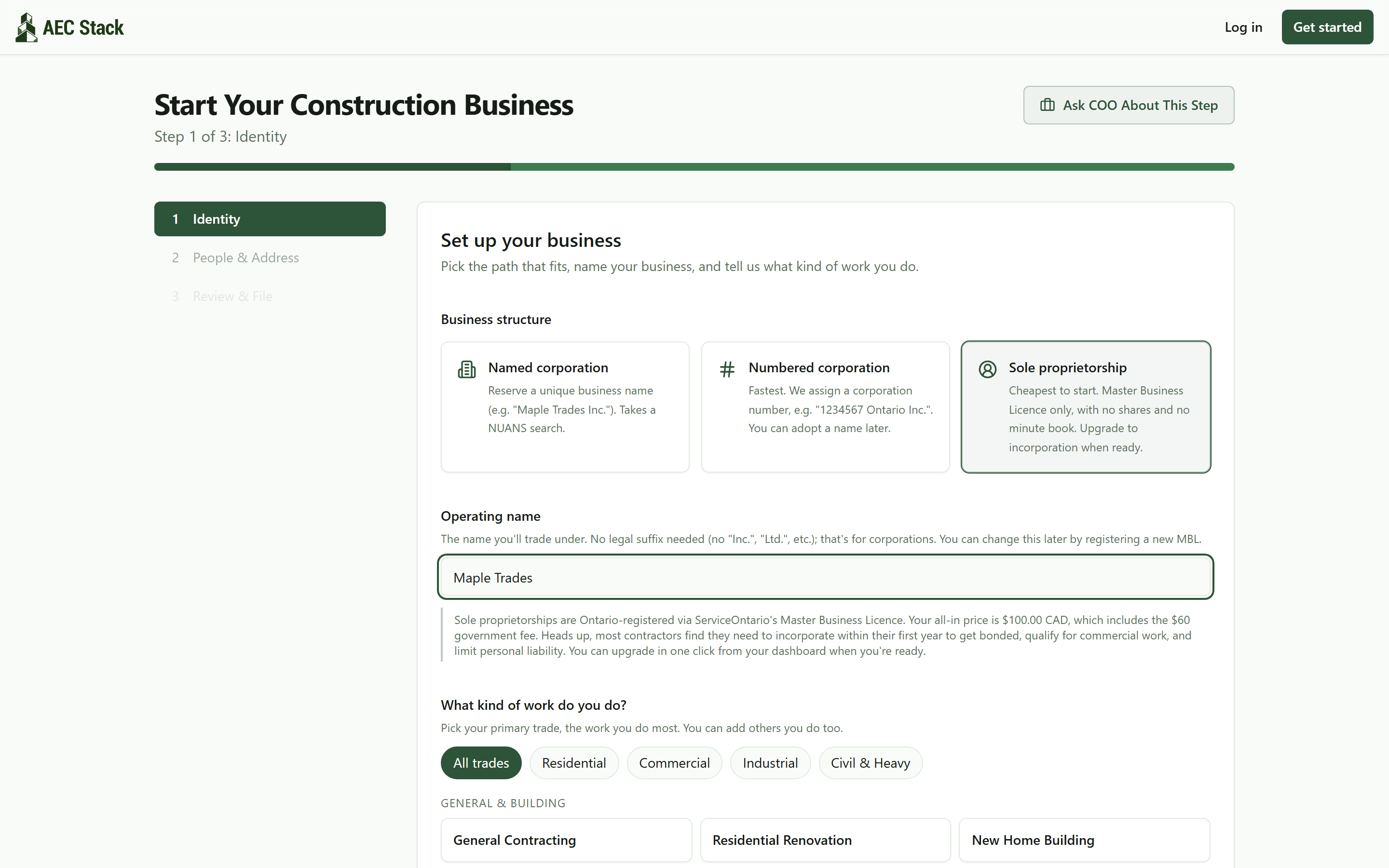 Sole proprietorship selected: an operating name and no legal suffix.
The same screen works from a phone, so the decision you have been putting off can be settled from the truck:
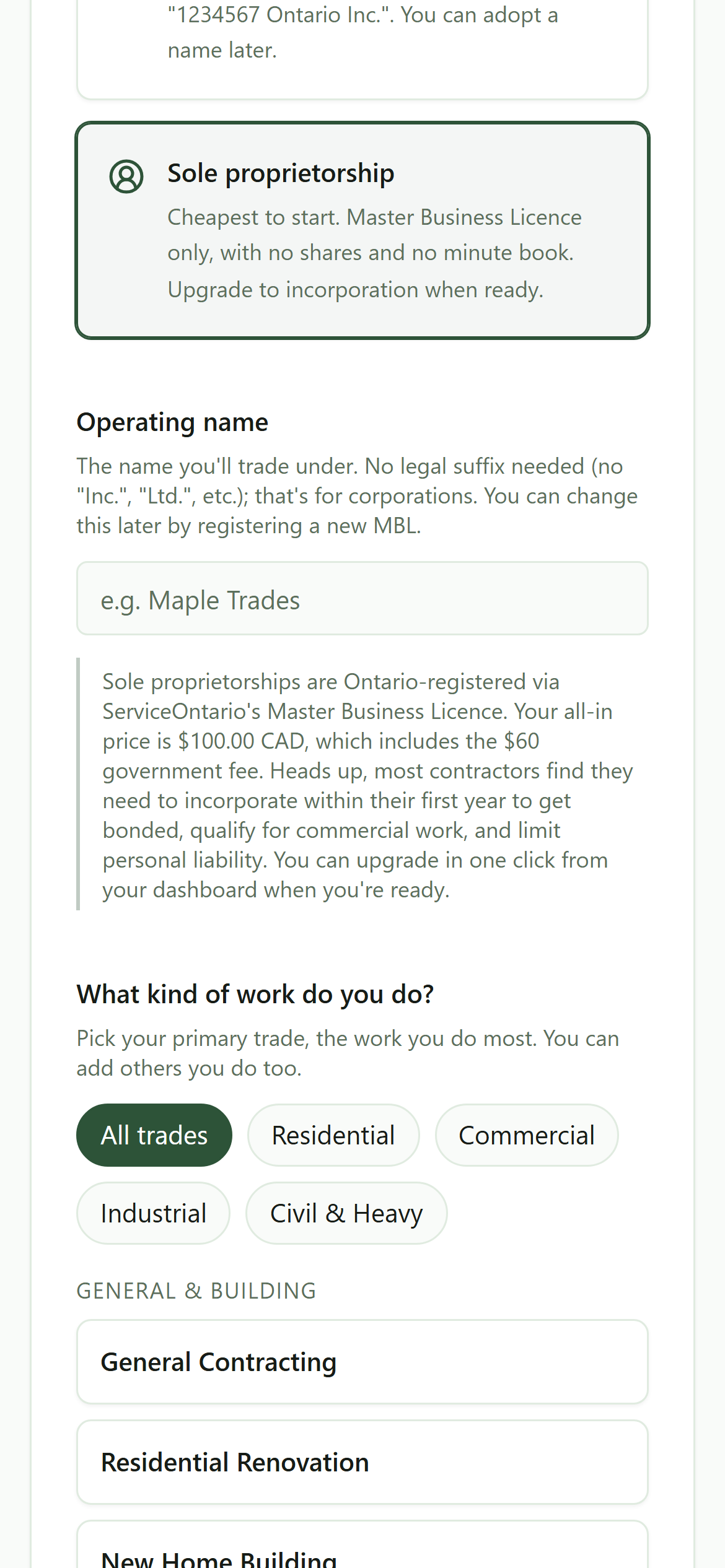 The same decision on a phone.
Give it an owner and an address
Step 2 for a sole proprietor is your name and your address, and the business address borrows the owner's address by default. There are no share classes, shareholders, or minute book anywhere on the path. One honest note: the form section is titled "Directors & Officers" because the corporation paths share it; for a sole proprietorship, the only name on it is yours.
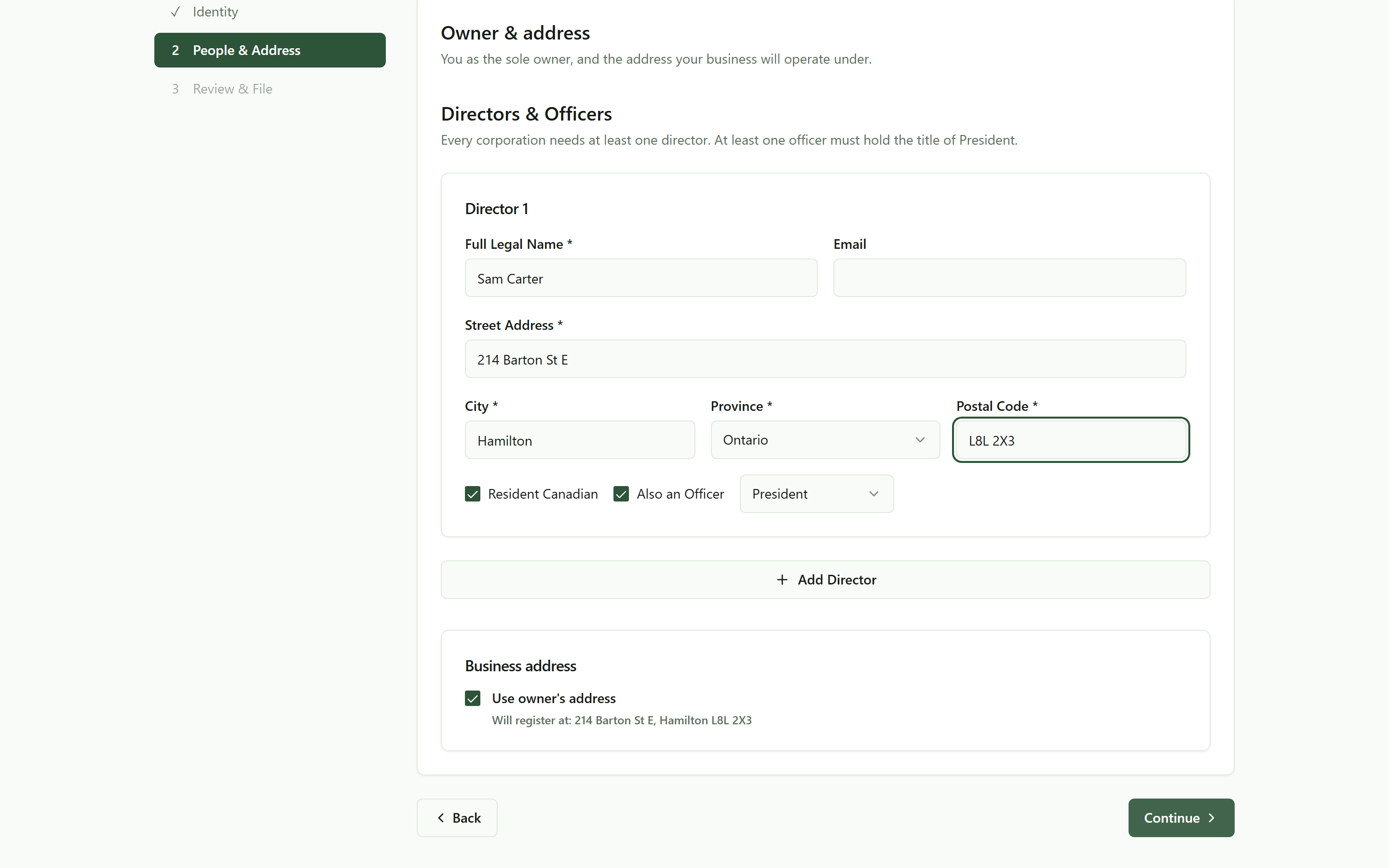 The whole of step 2 for a sole proprietor: your name and your address, which the business address borrows by default. No share classes, no minute book.
Review what you file and what you pay
Step 3 is the full review: identity, people, address, and an order summary with one number on it. This is the sole proprietor version:
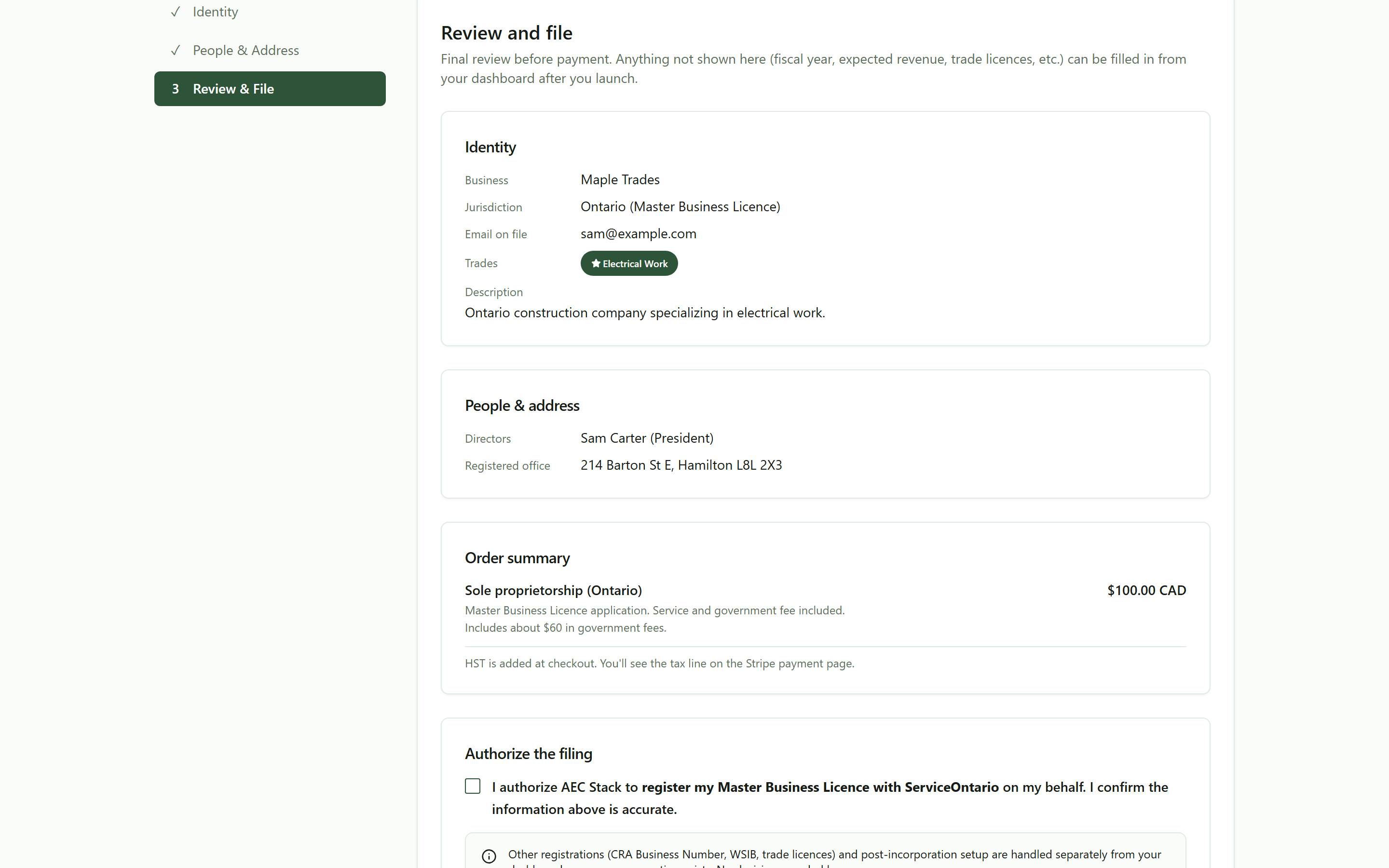 Review the current terms before payment.
And the same screen on the incorporation path, here for a numbered Ontario corporation:
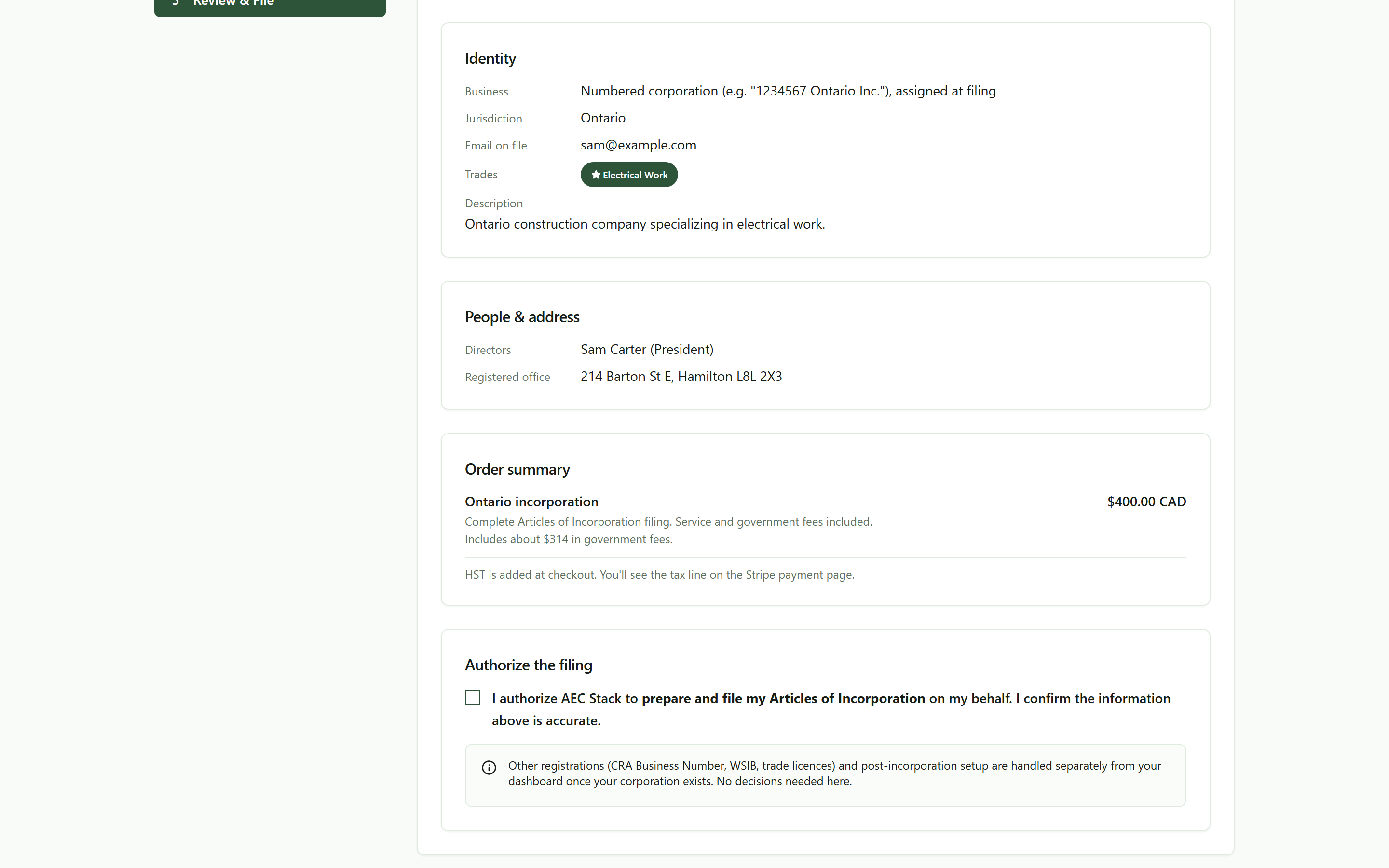 Review the current terms before payment.
Read the box under the consent checkbox on either path: CRA Business Number, WSIB, and trade licences are handled separately from your dashboard once the registration exists. Nothing on this screen signs you up for anything beyond the filing itself. Past this point is a Stripe payment page, which is where this guide stops.
What it costs
The review step shows the current terms for the path you selected. Read the order summary before you authorize a filing so the structure and filing basis are both explicit.
Registering is one step, and the wizard ends at a dashboard rather than a receipt for exactly that reason. WSIB, insurance and your trade licence each come after it on their own clock, and the dashboard carries all three so the gap between registered and actually able to bid does not live in your head.
Whether incorporating saves you tax turns on numbers this page has never seen, and the WSIB treatment the contractors above are arguing about has rules worth confirming against your own situation. That is the hour with an accountant that pays for itself, and it costs less before the filing fee than after it.
On AEC Stack: the same flow continues past registration. Start your business shows the full launch path, where the dashboard tracks the after-registration list, CRA numbers, WSIB, insurance, and licensing, as a checklist instead of a shoebox of bookmarks.
If the fork has been stalling you, open the wizard and compare the paths against your own situation. The decision gets easier the moment it stops being abstract.
Take this guide with you
The full write-up, every screenshot and clip, captions, and a machine-readable manifest in one zip. Share it with your office or hand it to whoever runs your socials.
Download the kitContinue reading