Ontario / Practical guides
Get paid for the engineering before you hand it over
Somebody wants a boiler sized or a panel schedule laid out, and what they are buying is your judgement. Put the design fee on the quote as its own line, credited against the contract, and make paying it a single tap.
Browse all Ontario guidesPut this into practice
Build the offer
Connect the scope, price, assumptions, and client response in one working proposal.
There is a point in your trade career where you realise you are doing paid work for free. Somebody wants a boiler sized, a panel schedule laid out, a load calculation done, and what they are actually buying is your judgement. Then they take your drawing to the cheapest installer in the phone book.
The answer is not to work faster. It is to charge for the part that has value.
The people who reached that point say it plainly
"I'm tired of laying out jobs for people...I won't even give boiler sizes, unless, they are paying me a design fee $200.00 or giving me a deposit."
That is not bitterness, it is pricing. He worked out what his engineering is worth and stopped giving it away. The only thing standing between you and doing the same is the awkwardness of asking, and how fiddly it is to actually take the money.
Make it a line, not a favour
Put the design fee on the quote as its own priced item, the same as any other line. An allowance or an "other" line with a description like "Load calculation, panel schedule and layout drawing, credited against the contract if the job proceeds".
Two things happen the moment it is a line. It stops being a favour you are quietly resenting, and the client sees a number they can say yes to. A client who does not was never going to sign.
Then invoice it. A standard invoice, with a due date, a branded PDF and your terms, exactly like any other. A deposit works the same way: raise it, send it, and start when it clears.
Then make paying it effortless
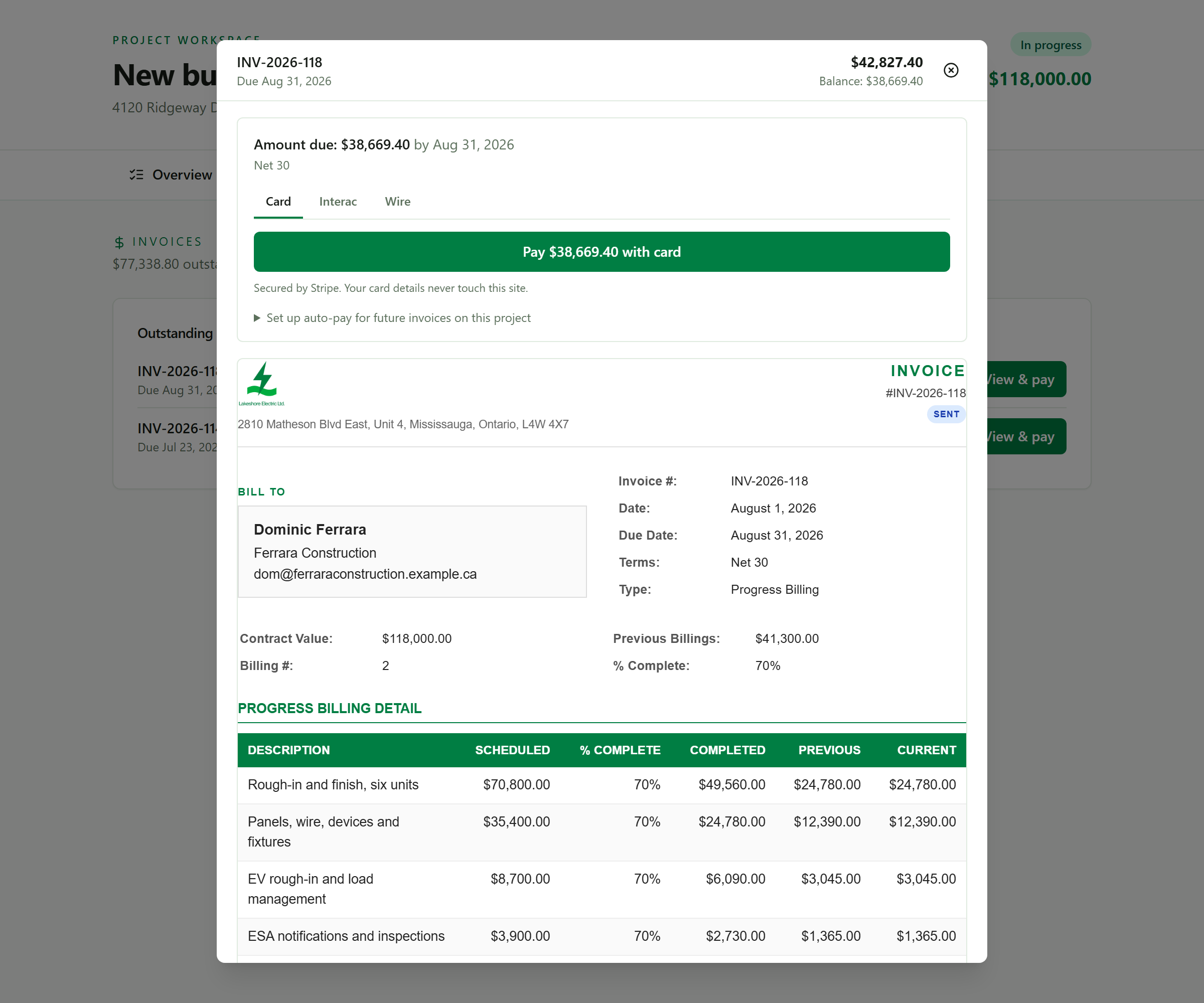 What the client opens. Card, Interac or wire, the branded invoice underneath, and a progress billing breakdown that shows exactly what is being charged for.
Card, Interac or wire, on one screen, with the invoice itself sitting underneath so they can see what they are paying for before they pay it.
Card is the one that gets deposits paid the same day. The client taps, Stripe takes it, the invoice flips to paid on its own, and a tax receipt is emailed to them automatically. You do not touch anything and you do not have to ask twice.
Interac and wire details are there to copy. Plenty of commercial clients will only pay that way, and this saves the email where you paste your details and hope.
Auto-pay for the rest of the job. One mandate signed once, and the invoices after this one get pulled instead of chased. On a long job that is the difference between a payment schedule and a monthly negotiation.
They can see where they stand
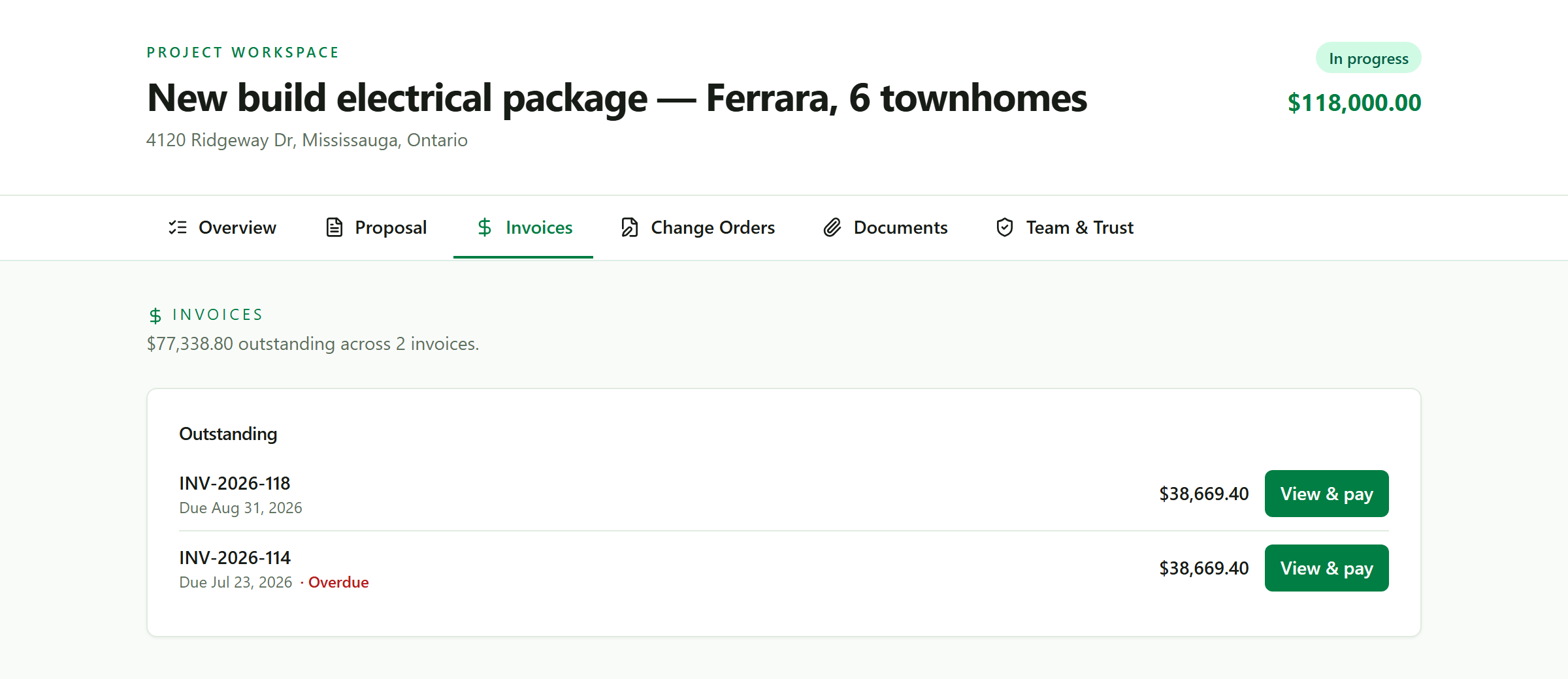 Your client sees what is outstanding and what is overdue on one screen, with a pay button beside each.
Clients pay late for boring reasons more often than bad ones: the invoice went to the wrong person, it is in a spam folder, the person who approves it has been away. A page that shows what is outstanding, what is overdue, and has a pay button next to each removes most of those excuses without you having to make a phone call about it.
How to ask for it without the awkwardness
Name it before you visit. "There's a $250 design fee for the load calculation and layout, credited against the job if you go ahead." Said on the phone, before you drive there, it filters the tire-kickers for free.
Credit it against the contract. This is the sentence that closes it. They are not paying extra, they are paying early.
Take a deposit on anything with material in it. You are not a bank. A deposit that covers the material order means a cancelled job costs you time, not cash.
Send it the same day. A design fee invoiced three days later feels like an afterthought. Invoiced within the hour, it is simply how you work.
And the fee only lands after you are paid
Commercial terms depend on the workflow. Review the relevant AEC Stack product page before you start.
Commercial terms depend on the workflow. Review the relevant AEC Stack product page before you start.
On AEC Stack: what to put in the number is pricing a job and what an hour costs you. If the money is already late, the ladder is when a client will not pay.
Put a design fee line on the next quote you write. One sentence on the phone beforehand and a number on the page, and you will find out very quickly which of your enquiries were ever going to become jobs. The line goes on a quote in the demo business in about ten seconds if you want to see it sitting there first.
Take this guide with you
The full write-up, every screenshot and clip, captions, and a machine-readable manifest in one zip. Share it with your office or hand it to whoever runs your socials.
Download the kitContinue reading